
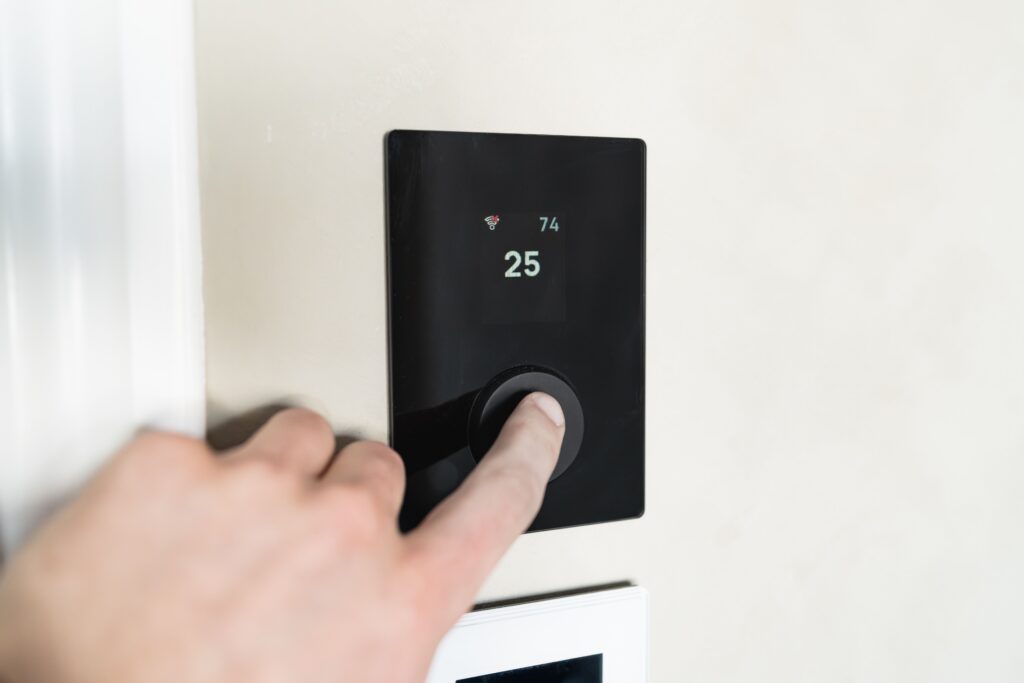
What Is the Average Lifespan of a Thermostat?
The average lifespan of a thermostat is approximately 10 years. If your thermostat is 10 years old or older, replacing it is often the better option. Upgrading to a programmable thermostat can help improve comfort by learning your household’s heating and cooling patterns and adjusting temperatures accordingly.
How Long Does a Thermostat Typically Last?
Most thermostats have an average lifespan of about 10 years. While some units may continue operating beyond that timeframe, age can affect their accuracy, responsiveness, and overall performance. Because thermostats serve as the control center for your heating and cooling system, even minor performance issues can impact indoor comfort.
Over time, internal components can wear down, causing the thermostat to respond less accurately to temperature changes. This can result in inconsistent heating or cooling cycles, making it more difficult to maintain a comfortable indoor environment.
If your thermostat is approaching or has exceeded the 10-year mark, it may be worth evaluating whether a replacement could improve system performance and convenience.
Signs Your Thermostat May Be Near the End of Its Lifespan
A thermostat does not always stop working completely when it reaches the end of its useful life. In many cases, performance gradually declines over time.
Common signs that an aging thermostat may need replacement include:
- Inconsistent room temperatures
- Frequent manual adjustments
- Delayed system response
- Difficulty maintaining programmed settings
- An unresponsive display or controls
When these issues occur in a thermostat that is around 10 years old, replacing the unit is often a practical solution. A newer thermostat can provide more accurate temperature control and help your HVAC system operate more effectively.
Why a Programmable Thermostat Is a Smart Upgrade
If you’re replacing an older thermostat, a programmable model is often worth considering. Modern programmable thermostats are designed to adapt to your household’s daily routine and temperature preferences.
Rather than manually adjusting settings throughout the day, homeowners can create schedules that automatically change temperatures based on occupancy patterns. Some models can even learn usage habits over time.
Benefits of programmable thermostats include:
- Improved temperature consistency
- Greater convenience
- Customized scheduling options
- Better alignment with daily routines
Because every household has unique heating and cooling needs, programmable thermostats provide a flexible way to manage indoor comfort without constant adjustments.
What Thermostat Lifespan Means for Homeowners in the Twin Cities Area of Minnesota
Homeowners in the Twin Cities area of Minnesota rely on their HVAC systems throughout the year. Seasonal weather changes can place significant demands on both heating and cooling equipment, making thermostat performance especially important.
A thermostat that is more than 10 years old may not provide the same level of accuracy and control as a newer model. Even if it appears to be functioning, age-related wear can affect how efficiently it communicates with your HVAC system.
For homeowners in the Twin Cities area of Minnesota, replacing an aging thermostat can be a simple way to improve temperature control and support year-round comfort. A programmable thermostat can also help accommodate changing seasonal needs by automatically adjusting settings based on household schedules.
Common Myth: A Thermostat Only Needs Replacement When It Stops Working
One common misconception is that a thermostat should only be replaced after it completely fails.
In reality, many thermostats continue operating long after their performance has started to decline. A thermostat may still turn the HVAC system on and off while providing less accurate temperature readings or requiring frequent adjustments.
Because the average lifespan of a thermostat is approximately 10 years, age alone can be a good reason to consider replacement. Upgrading to a newer programmable thermostat can provide improved functionality and a better user experience, even if the old unit still appears to be working.
When Should You Replace Your Thermostat?
A good rule of thumb is to start considering replacement once your thermostat reaches about 10 years of age. While every situation is different, replacing an older thermostat before significant problems develop can help maintain consistent indoor comfort.
You may want to consider replacement if:
- Your thermostat is approximately 10 years old.
- Temperature control has become inconsistent.
- The display or controls are unreliable.
- You want programmable scheduling capabilities.
- Your HVAC system has recently been upgraded.
Replacing an aging thermostat is often a straightforward upgrade that can improve convenience and support more consistent heating and cooling performance.
FAQ
Can a thermostat last longer than 10 years?
Yes, some thermostats can continue functioning beyond 10 years. However, performance and accuracy may decline as the unit ages.
What type of thermostat should I choose as a replacement?
A programmable thermostat is often a good choice because it can learn and adapt to your household’s heating and cooling routines.
How do I know if my thermostat is failing?
Common signs include inconsistent temperatures, frequent adjustments, delayed responses, and difficulty maintaining desired settings.
Should I replace my thermostat when upgrading my HVAC system?
Many homeowners choose to replace both at the same time to ensure compatibility and take advantage of newer thermostat features.
FAQ: https://callvector.com/frequently-asked-questions/#what-is-the-average-lifespan-of-a-thermostat
Conclusion
The average lifespan of a thermostat is approximately 10 years. Once a thermostat reaches that age, replacing it is often the better option, especially if you begin noticing inconsistent performance or temperature control issues. Upgrading to a programmable thermostat can provide greater convenience and help align heating and cooling settings with your household’s routine.