
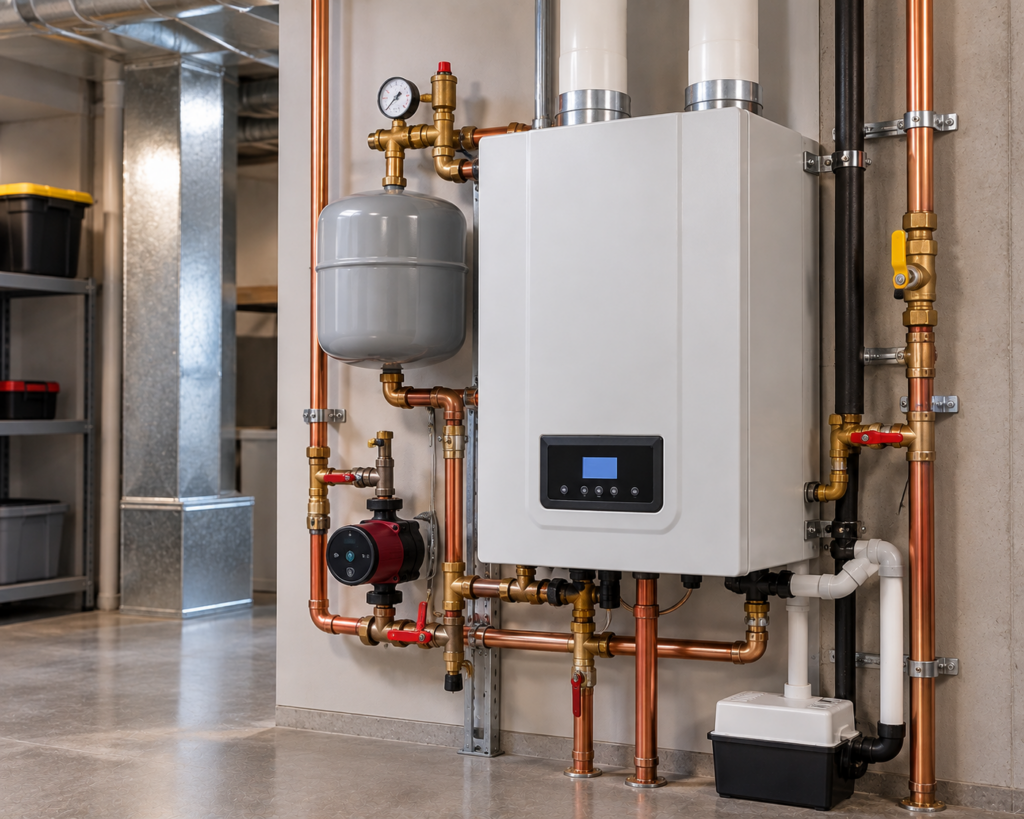
Why do boilers fail in winter?
Boilers can fail during winter when colder temperatures expose worn components, circulation restrictions, control faults, frozen piping, or neglected maintenance. These problems may not be noticeable during milder weather, but they can interrupt operation when dependable heat is needed most.
What Causes a Boiler to Stop Working During Winter?
A boiler may operate without noticeable problems during fall and then stop working once winter arrives. Cold weather is not always the direct cause of the failure. Instead, winter operation can reveal a weakness that has already developed within the system.
Common causes of winter boiler problems include:
- Restricted water circulation
- A worn or malfunctioning circulation pump
- Control or thermostat faults
- Frozen or vulnerable piping
- Air trapped within the system
- Pressure irregularities
- Existing leaks
- Worn mechanical or electrical components
- Deferred boiler maintenance
Each of these problems can affect the boiler differently. Some prevent the system from starting, while others interfere with heat distribution or cause the boiler to shut down as a protective measure.
How Does Restricted Circulation Affect a Boiler?
A boiler may generate heat correctly, but the building can remain uncomfortable if heated water is not moving through the system as intended. Trapped air, blockages, pump problems, or malfunctioning valves can prevent heat from reaching certain rooms or areas.
Signs of restricted circulation may include:
- Some rooms remaining colder than others
- Radiators or baseboards heating unevenly
- The boiler running without producing the expected comfort
- Unusual sounds from the boiler or piping
- Delayed or inconsistent heating
These symptoms can help a boiler technician determine whether the problem involves circulation rather than the boiler’s ability to produce heat.
Can Boiler Controls Cause a Winter Shutdown?
Boilers rely on thermostats, sensors, switches, and safety controls to start, regulate, and stop the heating process. If one of these components provides an incorrect reading or fails to respond, the boiler may cycle improperly or shut down.
Some shutdowns occur because a safety control has detected a condition that requires the system to stop. Repeatedly resetting the boiler may restore operation temporarily, but it does not correct the underlying fault.
A boiler that requires frequent resets should be professionally evaluated. The technician can inspect the controls and other components related to the symptoms instead of relying on repeated temporary restarts.
Can Frozen Pipes Prevent a Boiler From Working?
Pipes located in exterior walls, basements, utility rooms, or other poorly insulated spaces may be exposed to lower temperatures. If water freezes inside a vulnerable section, circulation may become restricted or stop completely.
The symptoms and appropriate response depend on which pipe is affected and whether freezing has caused damage. Because boiler systems and properties vary, suspected frozen piping should be evaluated carefully.
Identifying vulnerable piping before temperatures fall can help reduce the risk of losing heat during severe weather. Insulation, pipe location, and the surrounding temperature conditions may all need to be considered.
What Warning Signs Should Homeowners Watch For?
A boiler problem does not always begin with a complete shutdown. Changes in operation can provide an earlier indication that the system needs attention.
Warning signs may include:
- Uneven heating
- Unusual noises
- Repeated cycling
- Delayed startup
- Insufficient heat
- Inconsistent thermostat response
- Visible leaks
- Pressure irregularities
- Frequent resets
- Unexpected shutdowns
These symptoms do not identify one specific failure. A boiler technician can inspect the controls, pumps, valves, accessible piping, operating pressure, and other components to determine what is causing the problem.
How Can Pre-Season Boiler Maintenance Help?
Pre-season maintenance can reduce the risk of an avoidable winter interruption. During maintenance, a professional can check system operation, inspect accessible components, identify leaks or wear, and look for signs of restricted circulation or abnormal performance.
Maintenance cannot guarantee that a boiler will never fail. Components can still malfunction unexpectedly. However, an inspection creates an opportunity to correct visible concerns before the system is needed consistently and provides a better understanding of its overall condition.
Scheduling service may be particularly appropriate when the boiler has produced unusual sounds, heated rooms unevenly, cycled inconsistently, required repeated resets, or received limited recent maintenance.
Boiler Operation in the Twin Cities Area of Minnesota
Boilers in the Twin Cities area must provide dependable heat through extended periods of cold weather. Local properties may also have piping routed through basements, utility spaces, exterior walls, or other areas where temperatures can vary considerably.
Checking boiler operation and identifying vulnerable piping before winter can help reduce the risk of an unexpected heating interruption. It also provides time to address maintenance or repair needs before severe weather arrives.
FAQ
Can extremely cold weather make an older boiler stop working?
Cold weather can expose worn components, circulation restrictions, control problems, or other weaknesses that were not previously noticeable. The underlying condition should be identified before the failure is attributed solely to the weather.
Can frozen pipes cause a boiler to shut down?
Yes. Frozen piping can restrict water circulation and interfere with normal boiler operation. The effect depends on the location and condition of the affected pipe.
Should I keep resetting my boiler if it stops working?
Repeated resets are not a lasting solution. A reset may temporarily restore operation, but the original problem may remain. Some shutdowns are triggered by safety controls, so recurring issues should be professionally evaluated.
Does a boiler need maintenance before winter?
Pre-season maintenance is a practical way to check boiler operation, inspect accessible components, and identify visible wear, leaks, control concerns, or circulation problems before colder weather arrives.
Why is my boiler running but not heating every room?
Uneven heating may be related to trapped air, restricted circulation, pump problems, valve issues, or another system condition. A boiler technician can evaluate the symptoms and identify the cause.
Why do boilers fail in winter?
Boilers can fail during winter when colder temperatures expose worn components, circulation restrictions, control faults, frozen piping, or neglected maintenance. These problems may not be noticeable during milder weather, but they can interrupt operation when dependable heat is needed most.
Conclusion
Boilers can fail during winter for several reasons, including restricted circulation, control faults, frozen piping, pressure problems, leaks, and worn components. Changes such as uneven heating, unusual sounds, delayed startup, repeated cycling, or recurring resets can indicate that professional attention is needed.