
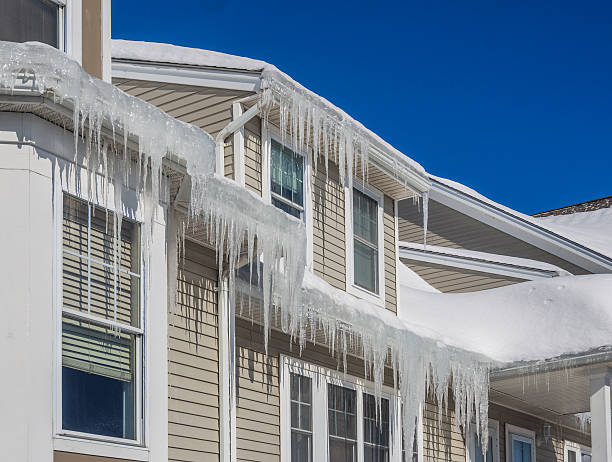
What is an Ice Dam?
An ice dam is a ridge of ice that forms along a roof edge when melting snow reaches colder areas and refreezes near the eaves. The resulting ice can block normal drainage, allowing additional meltwater to collect behind it and potentially move beneath roofing materials, where it may contribute to moisture and interior damage.
How does an ice dam form on a roof?
Ice dams develop when different areas of a snow-covered roof have different temperatures. Heat moving from the home’s living space into the attic can warm portions of the roof above the heated area.
When the roof becomes warm enough, some of the snow can melt. The resulting water travels down the roof toward the eaves. Because roof edges extend beyond the heated portion of the home, they can remain colder.
When meltwater reaches these colder areas, it can freeze again. Repeated melting and refreezing gradually creates a ridge of ice along the roof edge.
As that ridge becomes larger, it can interfere with normal drainage. Additional water may then collect behind the ice rather than flowing freely from the roof.
What problems can ice dams cause?
An ice dam is more than visible winter ice along a roof. The primary concern is the water that can become trapped behind it.
When meltwater cannot drain normally, it may find openings beneath shingles or around other roofing components. Moisture entering the building can affect several areas, potentially including:
- Roof decking and roofing materials
- Attic insulation
- Ceilings and walls
- Interior finishes
- Other moisture-sensitive materials
Wet insulation can also become less effective until the moisture problem is properly addressed.
Large amounts of ice may also place additional weight on roof-edge components and gutters. However, icicles or frozen gutters alone do not necessarily confirm that an ice dam is causing interior water intrusion. The overall roof and attic conditions should be evaluated when recurring problems occur.
What conditions contribute to ice dam formation?
Heat movement into the attic is an important factor in many ice dam problems. Warm air can reach the attic through insufficient insulation or openings between the living space and attic.
Potential contributing conditions include:
- Inadequate attic insulation
- Air leaks around attic access points
- Openings around ceiling penetrations
- Air leakage around ductwork
- Inappropriate attic ventilation
- Other sources of unwanted heat movement
Insulation, air sealing, and ventilation work together to help manage attic and roof temperatures. Addressing only the visible ice does not necessarily correct the conditions that allowed the ice dam to develop.
This is why recurring ice dams may indicate a need to evaluate areas beyond the roof surface itself.
Why are ice dams a concern in the Twin Cities area of Minnesota?
For homeowners in the Twin Cities area of Minnesota, winter snow combined with changing roof temperatures can create conditions that support repeated melting and refreezing.
One visible warning sign is a ridge of ice near the roof edge. Homeowners may also notice substantial icicles, although icicles alone do not always mean an ice dam is present. Water stains on ceilings or walls can indicate that moisture has already entered the home and should be investigated.
Homes in the Twin Cities area of Minnesota that experience recurring ice dams may benefit from evaluating attic insulation, air leakage, ventilation, and relevant HVAC or ductwork conditions.
Vector Services can evaluate heating and airflow concerns that may contribute to unwanted heat movement and help homeowners understand appropriate options for addressing those conditions.
Myth: Ice dams are caused by gutters
A common misconception is that gutters create ice dams because large amounts of ice are often visible around the gutter and roof edge.
In reality, an ice dam can develop even on a roof without gutters. The underlying process begins when snow melts on a warmer portion of the roof and then refreezes when the water reaches a colder area.
Clogged or frozen gutters may interfere with drainage and contribute to ice accumulation, but repairing or cleaning gutters alone does not necessarily prevent ice dams.
Long-term prevention generally requires identifying and addressing the conditions responsible for uneven roof temperatures rather than focusing only on the visible ice.
FAQ
What is an Ice Dam?
An ice dam is a ridge of ice that forms along the edge of a roof during winter when melting snow refreezes near the eaves. This happens because heat escaping from the home warms the upper roof while the edges stay cold, blocking proper drainage. Ice dams can force water back under shingles and cause leaks, insulation damage, and mold. Homeowners in Twin Cities Metro Area should call Vector Services to address insulation, ventilation, and heating issues that contribute to ice dam formation.
What causes an ice dam to form?
Ice dams form when snow melts on a warmer portion of the roof and the resulting water reaches a colder roof edge, where it freezes and gradually creates an ice ridge.
Can ice dams cause water damage inside a home?
Yes. Water trapped behind an ice dam can potentially move beneath roofing materials and contribute to moisture problems involving insulation, ceilings, walls, and other parts of the home.
Do gutters cause ice dams?
No. Ice dams can form even without gutters. Frozen or clogged gutters may affect drainage, but uneven roof temperatures and repeated melting and refreezing are the primary conditions involved.
Conclusion
An ice dam is a ridge of frozen water that develops when roof snow melts and then refreezes near a colder edge. As the ice grows, it can block drainage and allow additional meltwater to collect behind it. Addressing recurring ice dams therefore involves looking at contributing conditions such as insulation, air leakage, ventilation, and unwanted heat movement.
For homeowners in the Twin Cities area of Minnesota, Vector Services can evaluate heating, airflow, and related conditions that may contribute to ice dam formation. Identifying the factors affecting attic and roof temperatures can help homeowners determine appropriate steps toward reducing recurring winter ice dam problems.