
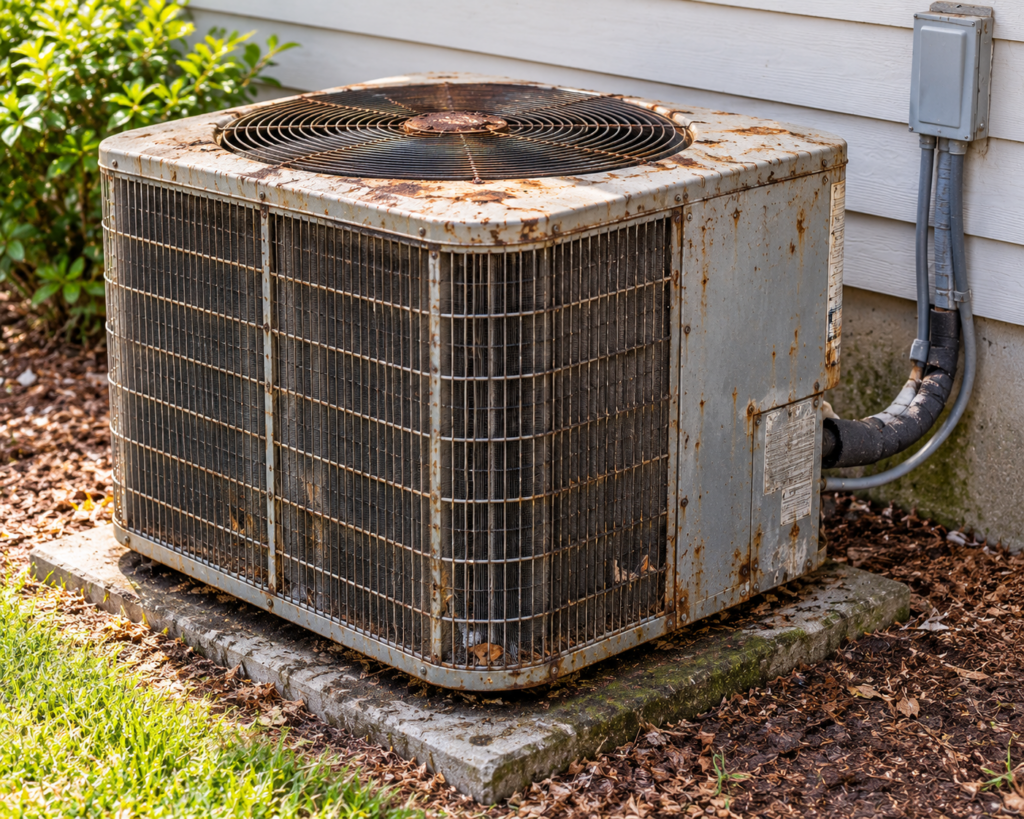
Should I replace my 15-year-old heat pump?
You do not necessarily need to replace a heat pump simply because it is 15 years old. However, reaching this age is a good reason to schedule a professional maintenance visit. A technician can inspect the equipment, identify worn components, and help determine whether continued maintenance, a specific repair, or planned replacement is the most appropriate next step.
What Should I Do When My Heat Pump Reaches 15 Years?
A 15-year-old heat pump has accumulated years of heating and cooling use. Even if the system is still operating, some components may be worn or working less efficiently than they once did.
The most practical next step is to schedule a professional maintenance visit if the system has not been inspected recently. This allows an HVAC technician to evaluate its current condition instead of making a recommendation based only on its age.
During the visit, the technician may:
- Examine the indoor and outdoor equipment
- Test electrical connections and controls
- Inspect the coils
- Evaluate airflow through the system
- Check refrigerant system performance
- Confirm proper thermostat operation
- Look for worn or damaged components
- Identify conditions that could lead to a future breakdown
The findings may show that the heat pump only needs routine maintenance, that one component should be repaired, or that several parts are beginning to deteriorate. This information gives homeowners a clearer basis for deciding what to do next.
When Can I Continue Using an Older Heat Pump?
Continued use may be reasonable when the heat pump still heats and cools consistently, maintains the thermostat setting, and has not required frequent repairs. The condition of its major components should also support continued operation.
Routine maintenance can help keep the equipment clean, reduce unnecessary strain, and uncover minor concerns before they become more disruptive. Maintenance cannot prevent every future problem, but it can provide a better understanding of how the system is currently performing.
Homeowners should also pay attention to changes in operation. New sounds, longer cycles, uneven temperatures, or reduced heating and cooling output may indicate that the equipment needs attention, even if it has not stopped working.
What Signs Suggest That Replacement May Be Appropriate?
Replacement may be worth considering when the system shows meaningful signs of declining reliability or performance. These can include:
- Frequent service calls or recurring breakdowns
- A major component failure
- Several worn or deteriorating components
- Unusually long operating cycles
- Uneven temperatures throughout the home
- Reduced heating or cooling output
- Difficulty maintaining the thermostat setting
- Increasing repair expenses
- Noticeably higher energy use
An increase in energy use can signal a problem, but it does not automatically mean the heat pump needs to be replaced. Dirty components, restricted airflow, leaking ductwork, insulation problems, or thermostat issues may also affect comfort and efficiency.
A complete HVAC evaluation can help rule out these other causes before a homeowner invests in new equipment.
How Should I Compare Heat Pump Repair With Replacement?
Repair may make sense when the problem is isolated, the necessary part is available, and the rest of the system remains dependable. One repair does not necessarily mean the entire heat pump has reached the end of its useful service life.
Replacement may offer better long-term value when repair expenses are becoming frequent, a major component has failed, or the equipment can no longer meet the home’s comfort needs. The technician’s findings, the cost of the proposed repair, and the system’s recent service history can all help guide the decision.
Taking action while the heat pump is still operating gives homeowners more control. If replacement appears likely, there is time to compare equipment options, consider comfort and efficiency priorities, and schedule the installation before an unexpected failure creates an urgent situation.
Heat Pump Maintenance in the Twin Cities Area of Minnesota
Heat pumps in the Twin Cities area provide comfort through substantial seasonal temperature changes. The same system may cool the home during warm weather and provide heating as outdoor temperatures fall.
This year-round workload makes consistent maintenance increasingly valuable as the equipment gets older. Scheduling service before a peak heating or cooling season can reveal developing concerns and help homeowners prepare for the system’s future needs.
The purpose of this inspection is not to assume that an older heat pump must be replaced. It is to verify that the components are working properly and determine whether any maintenance, repairs, or future planning are needed.
Myth: Every 15-Year-Old Heat Pump Must Be Replaced
A heat pump does not have to be replaced immediately when it reaches 15 years. Some systems remain dependable beyond that point, while others experience significant problems earlier.
The 15-year mark should serve as a reminder to check the equipment’s condition. A professional inspection can show whether the system is operating properly or developing problems that make replacement worth considering.
FAQ
Can a heat pump last longer than 15 years?
Yes. Some heat pumps continue operating beyond 15 years. Maintenance history, installation quality, operating demands, and component condition can all affect how long a particular system remains dependable.
Should I schedule maintenance for a 15-year-old heat pump?
Yes, especially if it has not been inspected recently. A maintenance visit can confirm whether the components are functioning properly and identify developing issues before they cause a breakdown.
Should I replace my heat pump before it stops working?
Planned replacement may be appropriate when the system shows significant wear, requires frequent repairs, or no longer provides dependable comfort. Planning ahead also gives you time to review equipment options before an emergency occurs.
Does higher energy use mean my heat pump needs to be replaced?
Not necessarily. Higher energy use can result from equipment wear, restricted airflow, dirty components, duct problems, insulation issues, thermostat problems, or changing weather. A technician can help determine the cause.
Can an older heat pump be repaired instead of replaced?
Yes. Repair may be practical when the problem is isolated and the rest of the equipment remains in good condition. The repair cost, service history, component availability, and overall reliability should be considered.
Conclusion
A 15-year-old heat pump does not automatically need to be replaced, but it should be professionally inspected if it has not received a recent maintenance visit. The results can show whether the system remains dependable, needs a specific repair, or is beginning to show signs that replacement should be planned.