Do You Need a Gas Furnace with a Heat Pump?
Not always. In areas with milder winters, a heat pump can often provide enough heating without a gas furnace. However, in colder climates where temperatures remain below freezing for extended periods, a gas furnace may be needed to supplement the heat pump and maintain reliable indoor comfort. For homeowners in the Twin Cities area, this combination is often considered due to winter conditions.
How a Heat Pump Works Alongside a Gas Furnace
A heat pump is designed to transfer heat from the outside air into your home during the winter and remove heat during the summer. Because it can both heat and cool a home, it is often considered an efficient year-round HVAC solution.
In regions with relatively mild winters, a heat pump may provide enough warmth on its own. Since temperatures do not frequently drop far below freezing, the system can continue operating effectively throughout the season without requiring additional heating equipment.
However, as outdoor temperatures become extremely cold, air-source heat pumps may have a harder time extracting enough heat from the air. When this happens, homeowners may benefit from having a gas furnace available as a backup heating source.
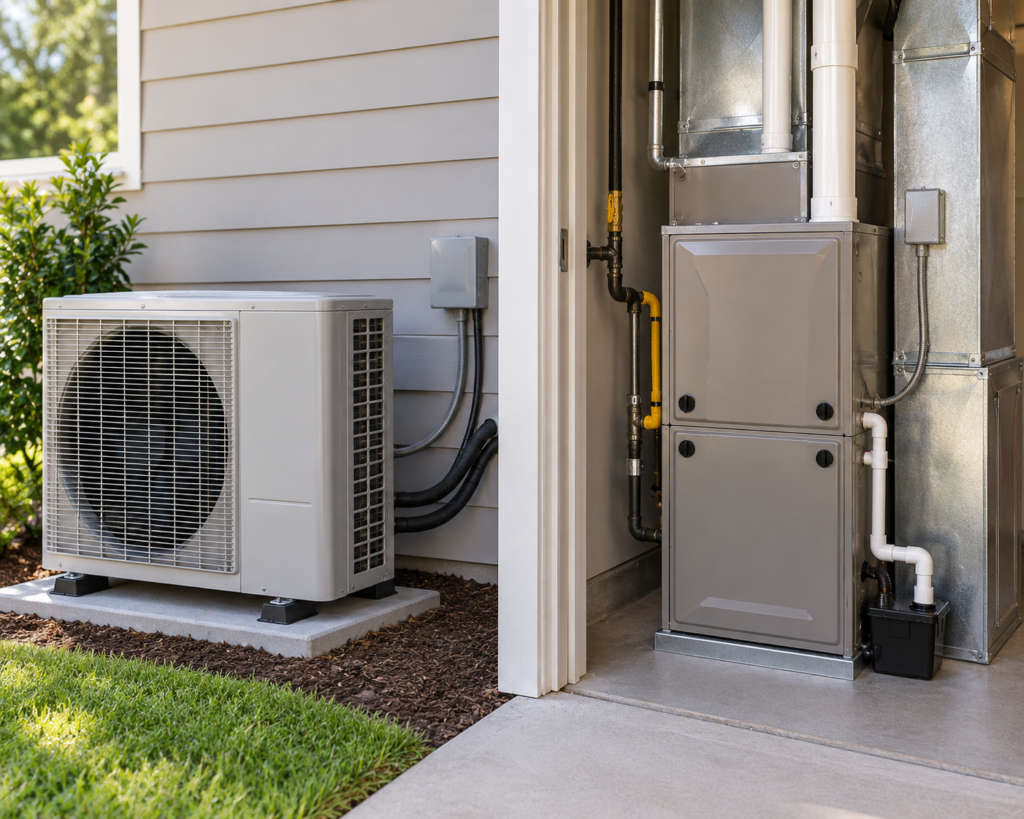
A system that combines a heat pump and a gas furnace is commonly known as a dual-fuel system. The heat pump handles heating during milder conditions, while the gas furnace provides supplemental heat when temperatures become especially cold.
When Is a Gas Furnace Necessary with a Heat Pump?
Whether you need a gas furnace with a heat pump depends largely on your climate and heating demands.
A heat pump alone may be sufficient when:
- Winter temperatures remain relatively mild
- Extended freezing conditions are uncommon
- The home’s heating requirements are moderate
A gas furnace may be beneficial when:
- Temperatures regularly stay below freezing
- Long cold spells occur throughout the winter
- Consistent indoor comfort is a priority during extreme weather
The key factor is that heat pumps generally perform best when outdoor conditions are not excessively cold. As temperatures drop, a gas furnace can provide the additional heating capacity needed to keep your home comfortable.
For homeowners evaluating HVAC options, understanding local climate conditions is one of the most important parts of the decision-making process.
Why Many Homeowners in the Twin Cities Area Consider Both Systems
The climate in the Twin Cities area can create heating challenges during the winter months. Extended periods of freezing temperatures are common, and homes often require dependable heating performance throughout the season.
Because of these conditions, many homeowners in the Twin Cities area consider pairing a heat pump with a gas furnace rather than relying solely on a heat pump. The heat pump can efficiently handle heating needs during milder weather, while the gas furnace can take over when temperatures become significantly colder.
This approach allows each component to operate under the conditions where it performs best. The result is a heating system designed to maintain comfort throughout changing winter weather conditions.
For homeowners in the Twin Cities area, evaluating winter temperature patterns can help determine whether a standalone heat pump or a dual-fuel setup makes the most sense.
Common Myth: Every Heat Pump Requires a Gas Furnace
A common misconception is that every heat pump must be paired with a gas furnace to work properly.
This is not true.
Many homes in warmer climates successfully rely on heat pumps as their primary and only heating source. In those areas, winter temperatures often remain within the operating range where heat pumps perform effectively.
The need for a gas furnace depends on local climate conditions rather than the heat pump itself. In colder regions, adding a gas furnace may improve comfort and heating reliability during extreme weather. In milder climates, a gas furnace may not be necessary at all.
The most important consideration is matching the heating system to the environment where it will operate.
What Should Homeowners Consider Before Choosing?
Before deciding whether a gas furnace is needed alongside a heat pump, homeowners should consider several factors:
- Local Climate: The colder the winter conditions, the more likely supplemental heating may be beneficial.
- Comfort Expectations: Some homeowners prioritize maintaining consistent indoor temperatures during severe weather and may prefer having a gas furnace available.
- Existing HVAC Equipment: Current heating and cooling equipment can influence which system configuration makes the most practical sense.
- Long-Term Heating Needs: Understanding how your home performs during winter can help determine whether a heat pump alone will provide adequate comfort.
Because every home is different, evaluating heating requirements alongside local climate conditions is essential when considering HVAC system options.
FAQ
Can a heat pump heat a home by itself?
Yes. In areas with mild winters, a heat pump can often provide enough heat without requiring a gas furnace or other supplemental heating system.
What happens when temperatures drop below freezing?
Heat pumps can still operate in cold weather, but their efficiency may decrease as temperatures remain below freezing for extended periods.
What is a dual-fuel HVAC system?
A dual-fuel system combines a heat pump and a gas furnace, allowing the heat pump to handle milder conditions while the gas furnace provides heat during colder weather.
Is a gas furnace always required in the Twin Cities area?
Not always. However, because winters in the Twin Cities area can be very cold, many homeowners consider a gas furnace and heat pump combination for added heating support.
Do You Need a Gas Furnace with a Heat Pump?
Not always. In areas with milder winters, a heat pump can often provide enough heating without a gas furnace. However, in colder climates where temperatures remain below freezing for extended periods, a gas furnace may be needed to supplement the heat pump and maintain reliable indoor comfort. In the Twin Cities area, this combination is often considered because of the region’s long, cold winters.
Conclusion
A gas furnace is not always necessary when installing a heat pump. In milder climates, a heat pump may provide sufficient heating on its own. In colder regions where temperatures regularly stay below freezing, a gas furnace can supplement the heat pump and help maintain indoor comfort throughout winter.