
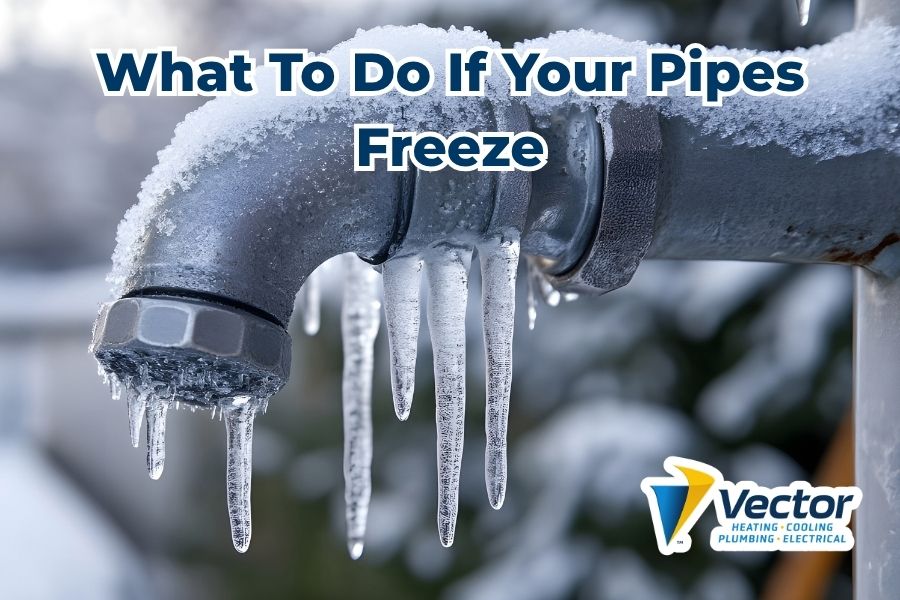
Frozen pipes can quickly turn from a winter inconvenience into a serious plumbing problem. When water freezes inside a pipe, it expands and can create enough pressure to crack or split the pipe. That damage may not become obvious until the ice starts to thaw and water begins flowing again.
If you’re wondering what to do if pipes freeze, the key is to act carefully. Knowing how to identify a frozen pipe, thaw it safely, and watch for signs of damage can help limit the risk of a burst pipe and water damage.
How To Tell If a Pipe Is Frozen
One of the clearest signs of frozen pipes is little or no water coming from a faucet when temperatures are below freezing.
Other warning signs can include:
- Reduced water flow from one or more fixtures
- Frost or condensation on exposed plumbing
- An unusually cold section of pipe
- Bulging or visible changes in the shape of a pipe
- Unusual noises when you turn on a faucet
If only one fixture is affected, the frozen section may be somewhere along that branch of the plumbing system. If several fixtures have little or no water, the frozen area could be farther back in the system.
Knowing how to tell if a pipe is frozen is especially important in areas such as basements, crawl spaces, garages, exterior walls, and cabinets along outside walls, where plumbing may be more exposed to cold temperatures.
What To Do If Pipes Freeze
If you suspect a pipe is frozen, avoid rushing into an aggressive DIY fix. Gradual, controlled thawing is safer for both the plumbing and your home.
- Turn on the Affected Faucet
Start by opening the faucet connected to the suspected frozen line.
Leaving the faucet open gives melting water somewhere to go as the ice begins to thaw. It can also help relieve pressure inside the pipe and make it easier to tell when water starts moving again.
- Locate the Frozen Section
Check accessible areas where pipes are most likely to get cold, including:
- Basements and crawl spaces
- Exterior walls
- Garages
- Under sinks
- Utility rooms
- Areas near drafts or poorly insulated openings
If you can see the pipe, look for frost or an especially cold section. If the frozen area is inside a wall, ceiling, or other inaccessible space, it may be safer to call a professional rather than trying to reach it yourself.
- Apply Gentle Heat
If you can safely access the pipe, apply gradual heat to the frozen section.
Safe options can include:
- A hair dryer
- Warm towels
- An electric heating pad
- A portable space heater positioned a safe distance away from water and combustible materials
When learning how to thaw frozen pipes, the goal is steady warmth, not intense heat.
Work gradually along the affected pipe, starting near the faucet and moving toward the frozen area. This helps melting water flow out through the open fixture.
- Keep Heating Until Water Flow Returns
Continue applying gentle heat until normal water flow returns.
Once the pipe has thawed, leave the faucet running briefly and inspect the area carefully. A pipe may have cracked while it was frozen, and the leak may only become noticeable after the ice melts.
If you can’t safely locate or thaw the frozen section, professional frozen pipe repair can help identify the problem and determine whether the pipe has been damaged.
What Should You Avoid When Thawing Frozen Pipes?
Some thawing methods can create a greater hazard than the frozen pipe itself.
Avoid using:
- Open flames
- Blowtorches
- Propane torches
- High-heat devices placed directly against piping
- Unattended space heaters
Open flames and extreme heat can damage pipes, ignite nearby materials, or create additional safety risks.
Slow, controlled heating is the safer approach.
Can Frozen Pipes Burst?
Yes, frozen pipes can burst. When water freezes, it expands. That expansion can increase pressure inside the plumbing system, especially between the frozen blockage and a closed faucet or fixture. If the pressure becomes high enough, the pipe can crack or split.
The damage may not always happen exactly where the ice is located. In some cases, pressure builds elsewhere along the line and causes the pipe to fail at a weaker point.
A burst pipe may also remain hidden while the water is frozen. Once the ice thaws, water can begin leaking through the damaged section.
What Should You Do If a Frozen Pipe Bursts?
If you discover a burst pipe, act quickly to reduce water damage.
First, shut off the main water supply to the home. Then open nearby faucets to help relieve remaining pressure in the plumbing system.
If water is near electrical outlets, appliances, or wiring, avoid entering the affected area if doing so may be unsafe. Shut off power only if you can do so safely.
Move furniture, storage, and other belongings away from the leak if possible, and contact a plumber for home plumbing repair.
The sooner the water is controlled, the easier it is to limit damage to floors, walls, cabinets, and other parts of the home.
How Can You Tell If a Frozen Pipe Was Damaged?
A pipe can thaw and begin flowing normally while still having a small crack or leak.
After thawing, watch for signs such as:
- Dripping or visible water
- Damp drywall or ceilings
- Water stains
- Musty odors
- Reduced water pressure
- The sound of running water when fixtures are off
- Unexplained moisture around walls, floors, or cabinets
Some leaks are easy to spot. Others may occur behind walls or in less accessible areas.
If you suspect hidden damage after a freeze, leak detection services can help locate the source before the problem causes more extensive water damage.
What Temperature Do Pipes Freeze?
Homeowners often ask, what temperature do pipes freeze?
Water freezes at 32°F, but that doesn’t mean every pipe will freeze the moment outdoor temperatures reach that point. Pipes are more likely to freeze during extended periods of cold weather, particularly when they are poorly insulated or located in unheated areas.
Risk increases when plumbing is exposed to very cold air for several hours, especially in:
- Exterior walls
- Garages
- Crawl spaces
- Unheated basements
- Attics
- Areas near drafts or openings to the outdoors
In Minnesota, long stretches of below-freezing temperatures make it especially important to identify vulnerable plumbing before winter reaches its coldest point.
How To Prevent Frozen Pipes
Knowing how to prevent frozen pipes can help reduce the risk of a plumbing emergency during a cold snap.
A few practical steps include:
- Insulate exposed pipes: Add pipe insulation in basements, crawl spaces, garages, and other vulnerable areas.
- Seal cold-air leaks: Check around plumbing penetrations, windows, doors, and foundation openings where outside air may reach pipes.
- Keep garage doors closed: If water lines run through or near the garage, limiting cold-air exposure can help.
- Open sink cabinets: During extreme cold, opening cabinets under sinks along exterior walls can allow warmer indoor air to circulate around plumbing.
- Maintain indoor heat: Avoid turning the thermostat too low, even when you’re away from home.
- Disconnect outdoor hoses: Remove garden hoses before freezing weather and follow any winterization steps recommended for outdoor plumbing.
Older homes may have pipes running through areas that were never well-insulated. Identifying those vulnerable spots before the temperature drops can make winter plumbing problems less likely.
When Should You Call a Plumber for Frozen Pipes?
Some frozen pipes can be safely thawed when the affected section is exposed and easy to reach. In other situations, professional help is the better option.
Consider calling a plumber when:
- You can’t locate the frozen section.
- The pipe is inside a wall or ceiling.
- You can’t safely reach or warm the pipe.
- Water doesn’t return after gradual thawing.
- The pipe looks cracked, bulging, or damaged.
- You notice water leaking after thawing.
- Multiple fixtures are affected.
- A pipe has already burst.
A plumber can help determine whether the problem is limited to one section of pipe or whether other parts of the plumbing system may also be at risk.
Get Help With Frozen Pipes in the Twin Cities
Frozen pipes can be stressful, especially when you aren’t sure whether a pipe is simply blocked by ice or has already been damaged.
Vector Services helps homeowners in the Twin Cities and nearby communities like Blaine, Bloomington, and Minnetonka diagnose frozen plumbing, explain what’s happening, and determine the next step. Whether you need help thawing a difficult section, repairing a damaged pipe, or checking for leaks after a freeze, the goal is to give you clear information and a practical solution based on what your home actually needs. Reach out to us today for expert help with all your plumbing concerns.
Frequently Asked Questions About Frozen Pipes
How Do You Know If Your Pipes Are Frozen?
Common signs of frozen pipes include little or no water from a faucet, reduced water pressure, frost on exposed piping, or an unusually cold section of pipe. During freezing weather, these symptoms can indicate that ice is blocking the line.
What Should You Do First If Your Pipes Freeze?
Start by opening the affected faucet and trying to locate the frozen section. If the pipe is accessible, apply gentle heat using a hair dryer, heating pad, or warm towels. Avoid open flames or extreme heat.
How Long Does It Take To Thaw a Frozen Pipe?
The amount of time varies depending on where the pipe is located, how much of it is frozen, and the method used to warm it. Continue applying gradual heat and monitoring the faucet until normal water flow returns.
Can Frozen Pipes Thaw on Their Own?
Yes, a frozen pipe may eventually thaw as temperatures rise, but waiting can allow pressure to remain trapped inside the plumbing and may delay discovery of a damaged pipe. If you know a pipe is frozen, it’s better to address it safely rather than simply waiting.
Can a Frozen Pipe Burst After It Thaws?
A pipe may have already cracked while it was frozen, but the leak may not become apparent until the ice melts. Always inspect the area carefully once water flow returns.
What Temperature Do Pipes Freeze?
Water freezes at 32°F, but household pipes usually require sustained exposure to freezing conditions before they freeze. Poorly insulated pipes and plumbing in unheated areas are especially vulnerable.
Should You Leave the Faucet Open When Thawing a Frozen Pipe?
Yes. Keeping the affected faucet open gives melting water somewhere to go and helps relieve pressure as the pipe thaws.
When Should You Call a Plumber for Frozen Pipes?
Call a plumber if you can’t locate or safely access the frozen area, if the pipe won’t thaw, if multiple fixtures are affected, or if you notice cracks, leaks, or other signs of damage.