Why Would a House Need a Boiler?
A house may need a boiler to provide consistent, comfortable heating throughout the home. Boilers deliver steady radiant heat that helps reduce cold spots and drafts. In The Twin Cities area, many homeowners also appreciate that boilers do not use ductwork, which means they do not circulate dust, allergens, or pet dander from room to room.
How Does a Boiler Heat a Home?
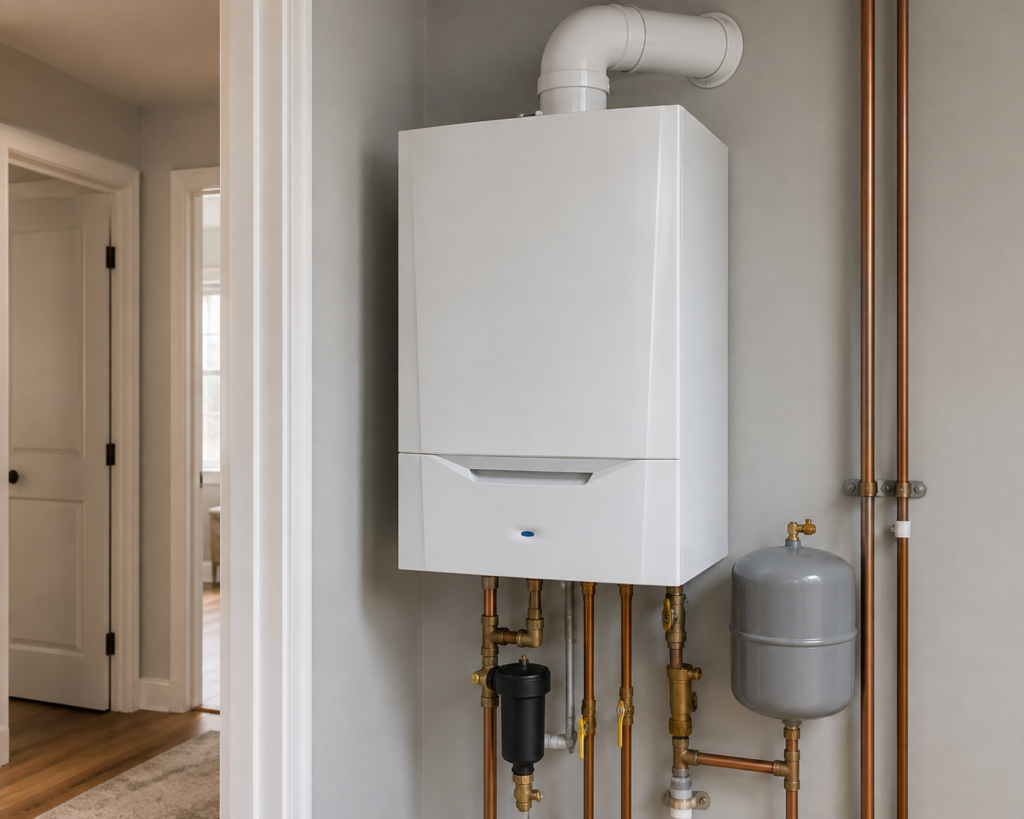
A boiler heats a home by warming water and distributing that heat through radiators, baseboard heaters, or in-floor radiant heating systems. Unlike forced-air systems that push heated air through ductwork, boilers provide radiant heat that spreads evenly throughout living spaces.
This method of heating creates a comfortable indoor environment because heat is delivered steadily rather than in cycles of warm and cool air. Many homeowners find that rooms maintain a more consistent temperature, helping reduce the cold spots and drafts that can occur with other heating systems.
Because boilers rely on water instead of moving air, they operate differently from traditional furnaces. The result is a heating system designed to provide reliable comfort during colder months.
Why Do Homeowners Choose Boilers?
Many homeowners choose boilers because of the comfort they provide. Radiant heat creates an even warmth that can make indoor spaces feel more comfortable throughout the day.
Some common reasons homeowners prefer boilers include:
- Consistent temperatures throughout the home
- Reduced cold spots and drafts
- Quiet operation
- Compatibility with radiant floor heating systems
- No need for ductwork
Another benefit is improved indoor air quality. Since boilers do not circulate air through ducts, they do not move dust, pet dander, or other airborne particles from room to room. For households concerned about indoor comfort and cleanliness, this can be an appealing feature.
While every home has different heating needs, boilers continue to be a practical option for many properties because they focus on delivering steady, dependable heat.
Why Boilers Can Be Beneficial in the Twin Cities Area
Heating systems play an important role in maintaining comfort during colder seasons. In The Twin Cities area, homeowners often look for heating solutions that can provide reliable warmth when temperatures drop.
A boiler’s ability to deliver steady radiant heat can be especially valuable during extended periods of cold weather. Instead of producing bursts of warm air, a boiler continuously distributes heat throughout the home, helping maintain a comfortable indoor environment.
Many homes in The Twin Cities area also benefit from the fact that boilers do not require ductwork. This can help reduce the circulation of dust and allergens while providing a quieter heating experience.
Whether installed in an older home with existing radiators or a newer property with radiant floor heating, boilers remain a popular heating option for homeowners seeking consistent comfort.
Common Myth: Boilers Are Outdated Heating Systems
A common misconception is that boilers are old-fashioned systems that no longer provide practical benefits. In reality, many homeowners continue to choose boilers because of the unique comfort they offer.
The idea that boilers are outdated often comes from their long history of use. However, the core advantage remains the same: delivering steady radiant heat that minimizes drafts and temperature fluctuations.
Modern homes can still benefit from boiler systems, especially when homeowners value even heating and reduced air circulation. Rather than being obsolete, boilers continue to serve as an effective heating solution for many properties.
Is a Boiler the Right Choice for Every Home?
Not every home requires a boiler, but they can be an excellent option when consistent heating and indoor comfort are priorities. Homes equipped with radiators, baseboard heating, or radiant floor systems are often well-suited for boiler heating.
When evaluating heating options, homeowners should consider factors such as their home’s layout, existing heating infrastructure, and comfort preferences. Some households prioritize steady radiant warmth and reduced air movement, making boilers an attractive choice.
Ultimately, a boiler is designed to provide dependable heat throughout the home while helping create a comfortable indoor environment during the heating season.
FAQ
Do boilers heat homes evenly?
Yes. Boilers provide radiant heat that is distributed steadily throughout the home, helping reduce temperature fluctuations, cold spots, and drafts.
Do boilers improve indoor air quality?
Because boilers do not use ductwork to move air, they do not circulate dust, allergens, or pet dander from room to room the way some forced-air systems can.
Are boilers only used in older homes?
No. While many older homes have boiler systems, boilers can also be installed in newer homes, especially those using radiant floor heating.
Can a boiler help make a home more comfortable in winter?
Yes. Boilers provide consistent radiant heat that helps maintain comfortable indoor temperatures during colder weather, including winters in The Twin Cities area.
Why would a house need a boiler?
A house may need a boiler to provide consistent, comfortable heating throughout the home. Boilers deliver steady radiant heat that helps reduce cold spots and drafts. In The Twin Cities area, many homeowners also appreciate that boilers do not use ductwork, which means they do not circulate dust, allergens, or pet dander from room to room.
Conclusion
A house may need a boiler because it provides consistent, comfortable heating through radiant warmth. Boilers help reduce cold spots and drafts while offering the added benefit of not circulating dust, allergens, or pet dander through ductwork. For many homeowners, this combination of comfort and indoor air quality makes boilers an appealing heating option.